Travelling Light
Why Shoes Are The Hardest Part Of Packing Light
Footwear resists compression, cannot be layered and has to suit both walking and evenings, which makes it the item that decides whether one bag is possible.
Most packing problems resolve themselves once clothes are chosen carefully. Shoes do not, because they break every rule that makes light packing work.
They occupy fixed volume
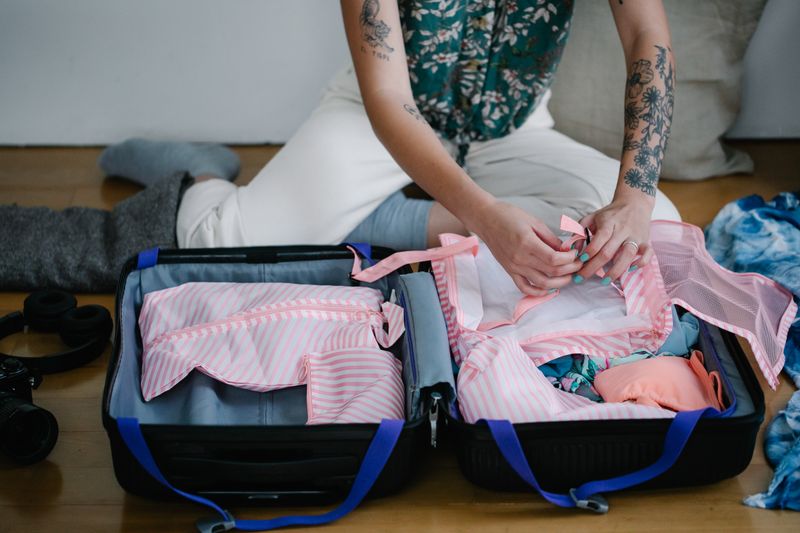
Clothing compresses. A jumper flattens, trousers fold, and a whole outfit reduces to something the size of a book without any harm done.
A shoe holds its shape by design, since the shape is the function. A pair takes the space it takes, and no packing technique meaningfully changes that.
In a cabin-sized bag one spare pair typically occupies a fifth of the volume. That is the same allowance as several days of clothing.
Layering does not apply
The core trick of light packing is combination: a few items that layer produce many outfits, so range comes from arrangement rather than from quantity.
Shoes cannot be combined. Each pair covers one set of conditions, and covering a second set means carrying a second pair rather than rearranging the first.
This is why footwear scales badly. Adding one more scenario to a trip adds a whole object, while adding one more day usually adds almost nothing.
The two demands rarely meet
A short city break asks for shoes that survive several hours of pavement, and it asks for shoes that do not look out of place in the evening.
Traditional walking footwear fails the second test. Smarter shoes fail the first, sometimes early on the first afternoon, at which point the trip is being endured rather than enjoyed.
The pairs that do both exist, and they are usually plain leather or a low-key trainer in a dark colour. Finding one is worth more to light packing than any list of tips.
Breaking them in is not optional
New shoes on a two-night trip are a genuine risk, because there is no recovery time. A blister on the first evening affects both remaining days.
The pair that travels should be one already worn for a long day at home. That is a test of the specific pair, not of the model or the brand.
Wearing the bulk is the real answer
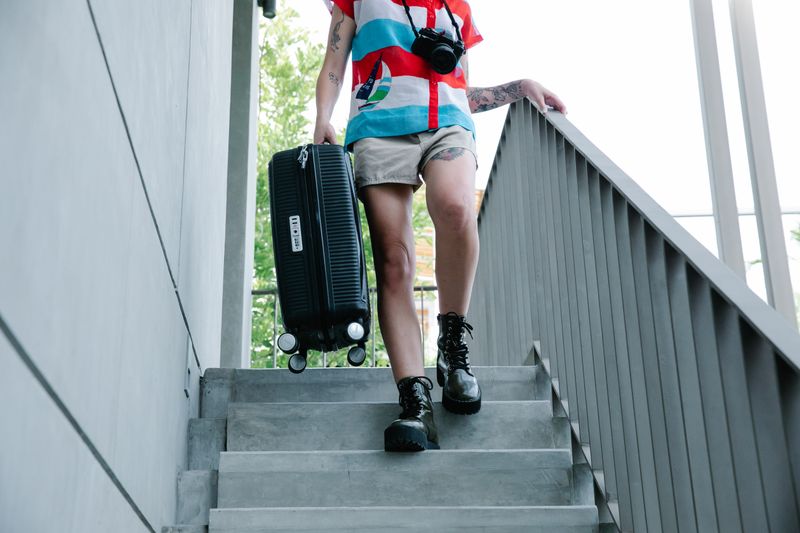
Whatever is heaviest and least compressible should be on your feet at the airport. The bag then carries the lighter pair, if a second pair travels at all.
For many two-night trips it does not need to. One pair that has already proved itself, plus the acceptance that you will not be dressed for every possible evening, is what makes a single bag work.
Questions readers ask
How far ahead is a forecast reliable?
The broad picture holds well over a couple of days and degrades noticeably beyond a week. A two-night trip fits inside the dependable range.
Should I rebook if the weather looks poor?
If the trip is outdoors and the outlook is genuinely bad, moving it usually beats enduring it, which is easier when accommodation terms are flexible.