Travelling Light
The bag you carry between checkout and departure
The final block of a short trip is spent attached to your luggage. Planning for that decides how the trip ends.
There is a settled way of talking about the checkout gap. It is worth asking how much of it survives contact with the detail.
The argument in brief
- The gap between checkout and leaving is often several hours.
- What you can do in it depends entirely on the bag.
- Planning it in advance converts dead time into trip time.
The gap is predictable and rarely planned
Checkout is usually late morning and departure is frequently much later, leaving a block of hours in between. On a two-night trip that block can be a tenth of the whole trip. It is almost never included in an itinerary, which is why it defaults to sitting somewhere.
Treating it as a planned part of the trip is the single fix.
A carryable bag keeps the morning normal
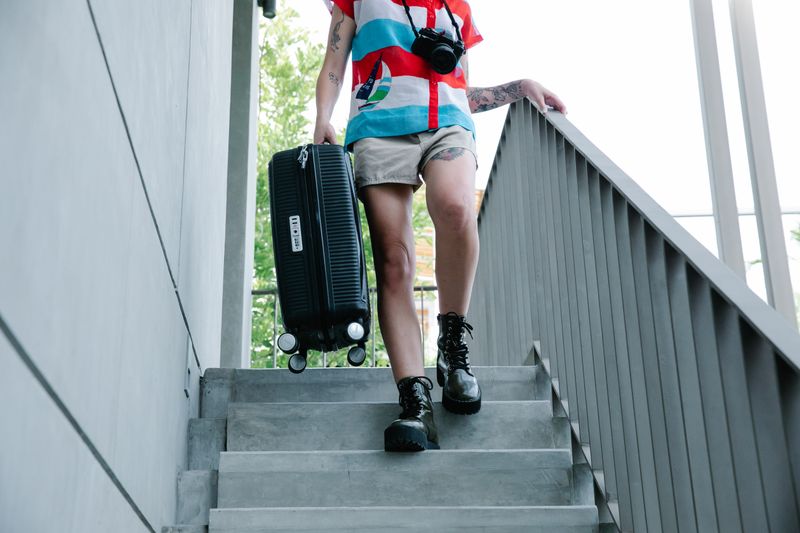
Something you can walk with for a few hours means the last morning is a walk, a meal and a final look around. Something you cannot means finding somewhere to leave it or returning to collect it.
The useful part is this: that is a detour of an hour at the point in the trip where hours are scarcest. The decision was made when the bag was chosen.
Plan the block around the departure route
Spending the final hours in the direction you will leave from removes a backtrack. It also removes the anxiety of watching the clock from the wrong side of the destination. One deliberate thing near that route is all the planning required.
Without it the block reliably turns into waiting.
Choose activities that tolerate luggage
Parks, markets, streets, viewpoints and casual food all work with a bag; formal interiors and long sit-down meals are less comfortable. Many indoor attractions restrict larger bags, which is worth knowing before arriving with one. Matching the activity to the constraint keeps the morning pleasant.
It is a small adjustment that prevents a frustrating last few hours.
Storage where it is needed
Where the bag genuinely cannot be carried, leaving it somewhere is worth arranging in advance rather than solving on the day. Availability varies by place and it is not universal, particularly in smaller towns. Confirming the option exists before relying on it prevents an unpleasant surprise.
The point is to have decided, not to improvise at eleven in the morning.
End deliberately
A last hour spent somewhere you liked, chosen in advance, is a much better ending than an early arrival at the departure point. It also means the trip finishes on the destination rather than on the journey. This costs nothing and changes how the whole trip is remembered.
Put simply, it is the cheapest improvement available to the final day.
Arriving home presentable
A final day spent walking with luggage ends in a journey, and on a Sunday that journey frequently runs straight into a Monday morning with nothing in between. Larger stations and airports often have paid showers, and some accommodation will let you use a bathroom after checkout if you ask at the moment you drop the bag rather than when you come back for it. A clean shirt kept aside for the return leg is the low-effort version of the same idea, and it costs nothing in a bag that is emptying out anyway.
None of this matters on a leisurely trip and it matters a great deal on the short break that finishes a few hours before you are expected somewhere.
The takeaway
The last morning is spent with your luggage. Plan it, and choose a bag that allows it.
Pick the one that costs you least, and let the rest wait.
Questions readers ask
Is a late checkout worth paying for?
On a short trip it sometimes is, because it converts a difficult block into a usable one. Storing the bag achieves much of the same thing for free where it is offered.
What if there is nowhere to leave a bag?
Then the bag needs to be one you can carry for a few hours, which is a decision made before you leave rather than on the last morning.