Travelling Light
Buying it there instead of carrying it
On a two-night trip almost anything replaceable can be bought at the destination, which removes it from the bag entirely.
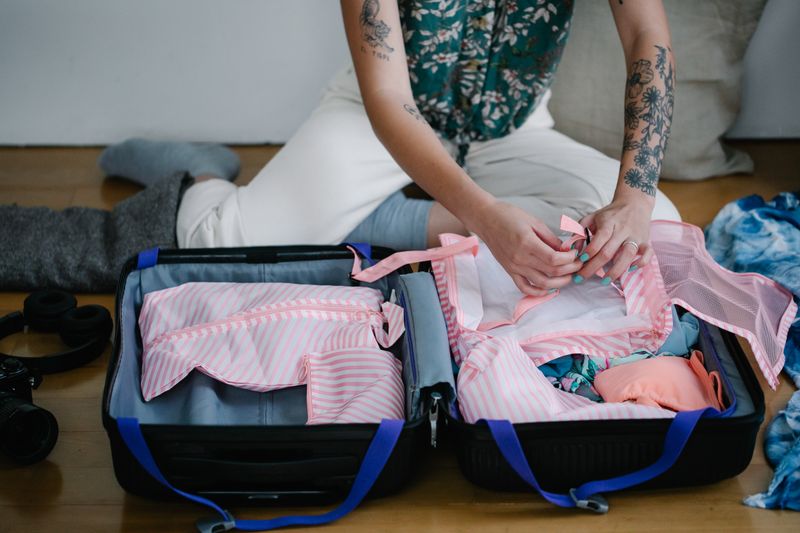
The options around buying at the destination are set out side by side below, with the conditions that genuinely favour one over the other.
The difference in one place
- Ordinary consumables are available almost everywhere and often cheaply.
- Buying locally costs money and saves carrying and worry.
- Some items genuinely cannot be assumed available and must be carried.
Most of what people carry is replaceable
Basic toiletries, an umbrella, a cheap layer and everyday supplies exist in almost every populated place. Carrying them means carrying against a small chance of needing them at an inconvenient moment.
On a two-night trip the total exposure is short, which makes the trade obvious. The cost of buying something once is usually less than the cost of carrying it all trip.
Shopping is not a lost hour
A visit to an ordinary local shop is one of the more revealing things you can do in an unfamiliar place. It shows what people actually eat, what things cost and how a place works. Treating it as part of the trip rather than an errand changes how it feels.
On an ordinary week, it is also frequently where the best cheap food comes from.
What genuinely must travel with you
Prescribed medication, anything with a specific medical requirement, essential documents and anything hard to obtain locally must be carried. Availability of even common remedies varies by country and some require a pharmacy consultation. For anything clinical, take medical advice about what to carry rather than relying on general travel guidance.
On an ordinary week, this is the line between sensible minimalism and a genuine problem.
Weather items are the usual error
People carry heavy weather protection for a forecast that has not happened yet. On a short trip the forecast a day or two before departure is reasonably reliable, which removes most of the guessing. Where it is wrong, an inexpensive local purchase solves it.
This one change usually removes the bulkiest item in the bag.
The souvenir problem in reverse
A bag packed to capacity leaves no room for anything acquired, which quietly restricts what you can bring back. Leaving space is easier than solving it at the departure point. On a short trip this is minor and it is a common irritation.
Where it helps most, it is another reason to start with less rather than more.
Do not overcorrect
Arriving somewhere small, late at night or on a day when shops are shut can leave you with nothing available. Opening hours and closing days differ by country and are the main risk in this approach.
For most people, carrying a minimum for the first evening covers the gap without carrying for the whole trip. The principle is buy locally, not arrive unequipped.
If that does not fit your week, it is not a failure of willpower.
The things that do not cross borders well
Plugs, voltage and charging standards differ, which makes an adapter one of the few small items genuinely worth carrying rather than hoping to find on arrival at nine in the evening. Clothing and shoe sizing runs on different scales in different places, so an emergency purchase of anything fitted is more of a gamble than it appears from a rail of familiar-looking items. Medicines sold over the counter vary in name, strength and whether they are available at all, so the box you would recognise at home may not exist and the nearest equivalent may have to be asked for.
In practice, for anything you take regularly that variation is a reason to carry your own supply, and to put any question about it to a pharmacist or doctor before travelling rather than at a counter abroad.
Side by side
| Consideration | What it means in practice |
|---|---|
| Most of what people carry is replaceable | Ordinary consumables are available almost everywhere and often cheaply. |
| Shopping is not a lost hour | Buying locally costs money and saves carrying and worry. |
| What genuinely must travel with you | Some items genuinely cannot be assumed available and must be carried. |
The takeaway
Carry what you cannot replace. Everything else can be a five-minute purchase on arrival.
The version you keep doing is the version that works.
Questions readers ask
Is buying at the destination more expensive?
Sometimes for branded items and often not for basics. Either way, the comparison is against the cost of carrying, which is time rather than money.
What should I never plan to buy there?
Prescribed medication, anything specific to a medical condition, and documents. Availability varies by country and some items require a local consultation.