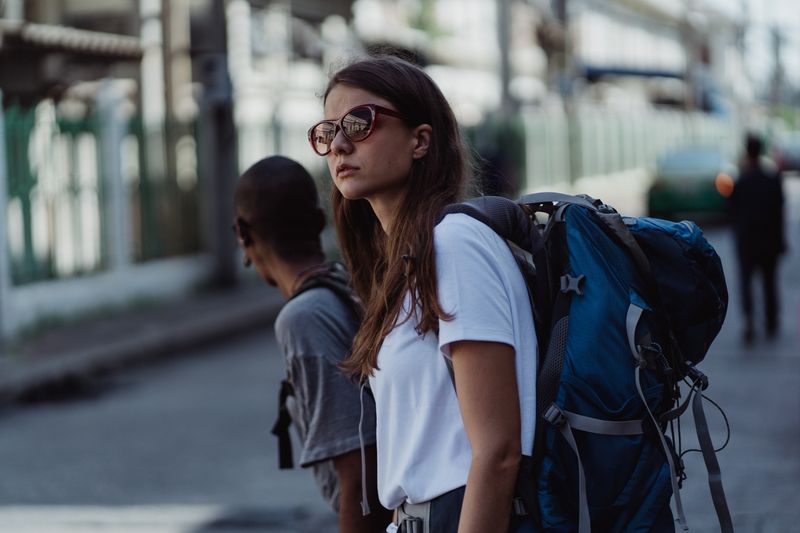
Travelling Light
Hands free changes what a day can hold
Two free hands is not a small convenience. It decides whether you can eat standing up, take a photograph or get on a crowded tram at all.
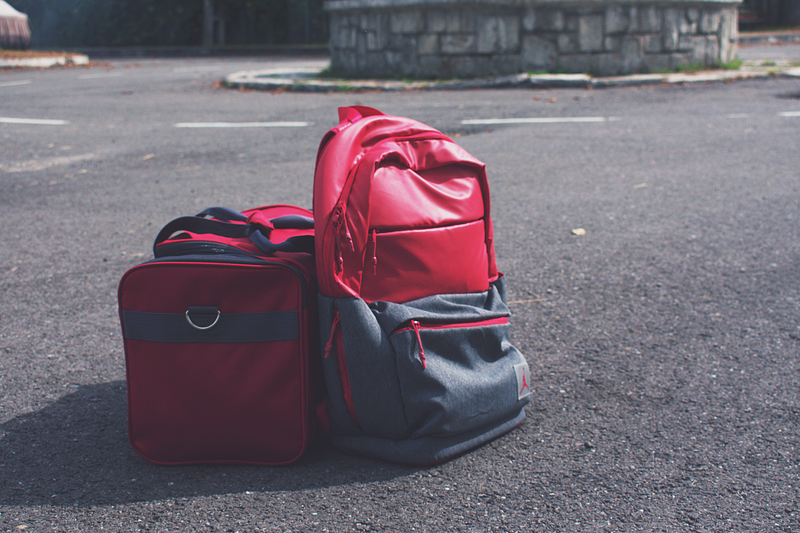
There is a short answer about moving hands-free and a useful one, and they are not the same. What follows is the useful one.
The short version
- Anything carried in a hand occupies attention as well as the hand itself.
- Hands-free movement makes transport, stairs and crowds significantly easier.
- The difference is largest on arrival and departure days.
What a hand is actually for
Moving through an unfamiliar city involves opening doors, holding rails, checking directions and paying for things, all of which need a hand. Something carried in one hand removes half that capacity and, more importantly, occupies a continuous part of your attention.
The attention cost is the larger of the two, because it is what makes a day feel effortful rather than merely busy. This is why people who travel with a carried bag often describe the day as tiring without being able to say exactly why. It is a small mechanical constraint with a disproportionate effect on how a short trip feels while it is happening.
Transport is where it shows
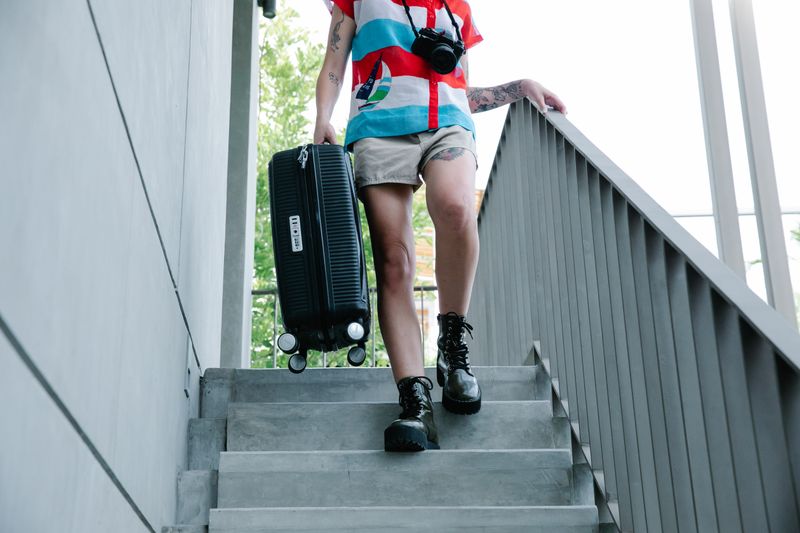
Boarding a busy tram, bus or train with something in each hand is slow, and it is unpleasant for everybody involved. Escalators, stairs and ticket barriers all assume at least one free hand, and none of them are optional in most cities. On a crowded service, holding a rail is a safety matter rather than a preference, particularly on vehicles that move sharply.
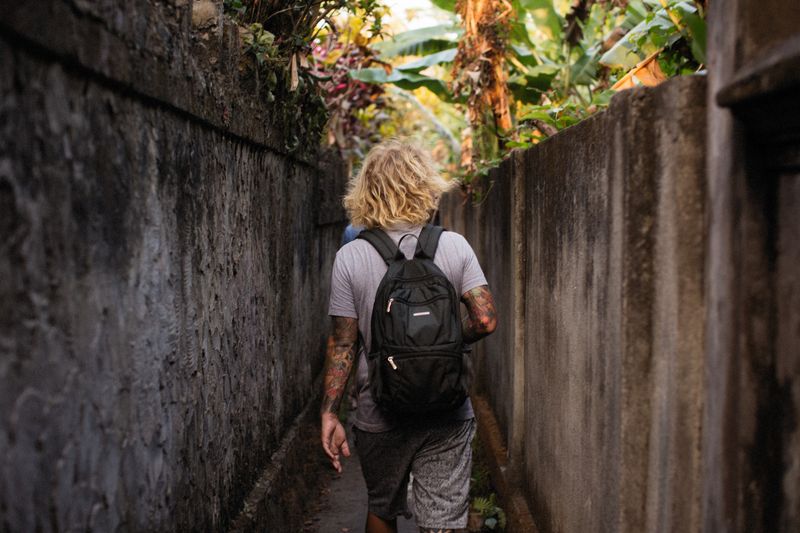
The airport journey at both ends is the concentrated version of all of this, and it is when you are carrying the most. A bag on the back, or a bag that can be, solves the entire category at no cost in what you are able to bring.
The arrival and departure days
On the two days when you are carrying everything, hands-free movement is the difference between an easy transfer and a fraught one. Those are also the days with fixed deadlines, which makes any additional friction more expensive than it would be otherwise.
The useful part is this: it is the underlying reason the checkout gap is manageable for some travellers and a problem for others on identical trips. Being able to walk for half an hour, get on a train and climb a set of steps without rearranging anything is what makes the gap usable. On a two-night trip those two days are the whole trip apart from the middle, so the effect is not marginal.
The small things that fill hands
Coffee, a phone, a map, a camera and a shopping bag all occupy hands, and on a day out they accumulate without anybody deciding. Each is individually reasonable and collectively they produce the state of continuous low-level juggling that ends a day early. Something worn rather than carried, whether a small bag or pockets that actually work, removes most of this quietly.
For most people, it is also what makes spontaneous decisions possible, since stopping for something no longer requires finding somewhere to put things down.
None of this is about how much you brought; it is about where it sits while you are moving.
Security and awareness
Anything carried in a hand is easier to put down and forget, and things put down in transit are the ones that get left behind. In crowded places a bag worn on the front is more secure than one worn behind, and neither requires a hand.
On an ordinary week, being able to move quickly, without rearranging what you are holding, is useful in situations where standing still is not ideal. The point is not anxiety but ordinary practicality, since a lost bag on a two-night trip removes a substantial part of it. Keeping documents and payment separately from everything else is the one arrangement worth maintaining regardless of what you carry.
Adjust the size of it until it is something you would actually do tired.
When carrying by hand is fine
A short journey on smooth ground with no transport involved makes all of this irrelevant, and there is no need to overthink it. Wheels on flat surfaces are genuinely comfortable and are the better option in modern cities with wide pavements and lifts.
The distinction is between moving through a city and moving between two fixed points, which are quite different activities. Most short trips involve a lot of the former, which is why the hands-free arrangement suits the format so well. Deciding which kind of trip this is, before choosing what to bring, is the whole of the reasoning.
The takeaway
Two free hands buys more usable day than almost anything else you can arrange.
Pick the one that costs you least, and let the rest wait.
Questions readers ask
Does it really matter over two days?
It matters most on the arrival and departure days, which on a two-night trip are most of the trip. Those are the days you carry everything.
Is a wheeled bag a mistake?
Not on smooth flat routes with lifts. It becomes one on steps, cobbles and crowded transport, which describes many old city centres.