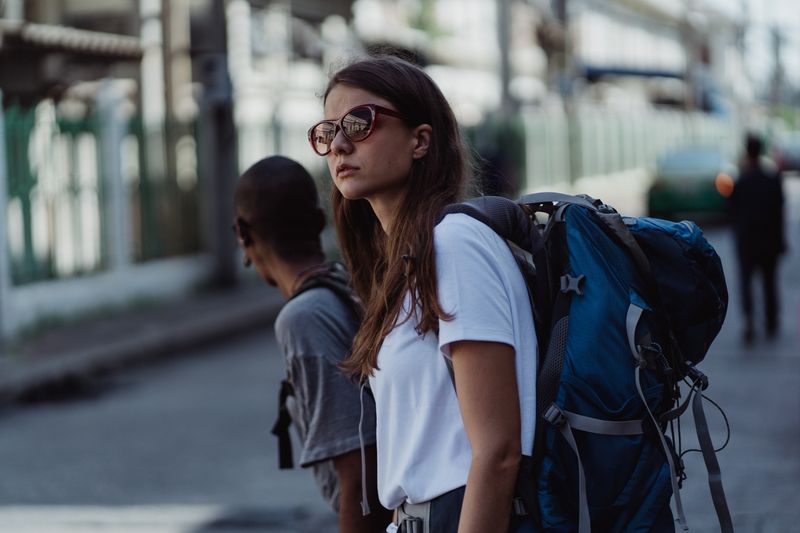
Travelling Light
The Bag That Fits Under The Seat In Front
The smallest cabin allowance forces a genuinely different packing approach, and for two nights it is achievable without discomfort if the volume is planned around fixed objects.
Many short-haul fares now include only a bag that fits beneath the seat in front. That is roughly half the volume of a traditional cabin case, and it changes what packing means.
The constraint is depth, not floor area
The space under an aircraft seat is wide and shallow, bounded by the seat legs and by how far a bag can slide before it reaches the passenger in front.
A bag that is tall and narrow fails here even if its stated volume is small. What fits is something flat, and that shape determines everything about how it is loaded.
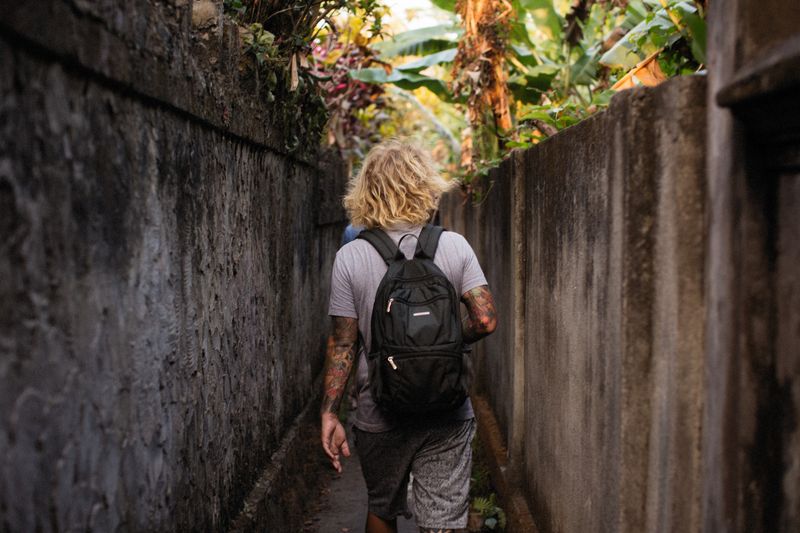
It is also the reason a rucksack of the same nominal size often works better than a small case, since it deforms into the available shape rather than fighting it.
Fixed objects are the budget
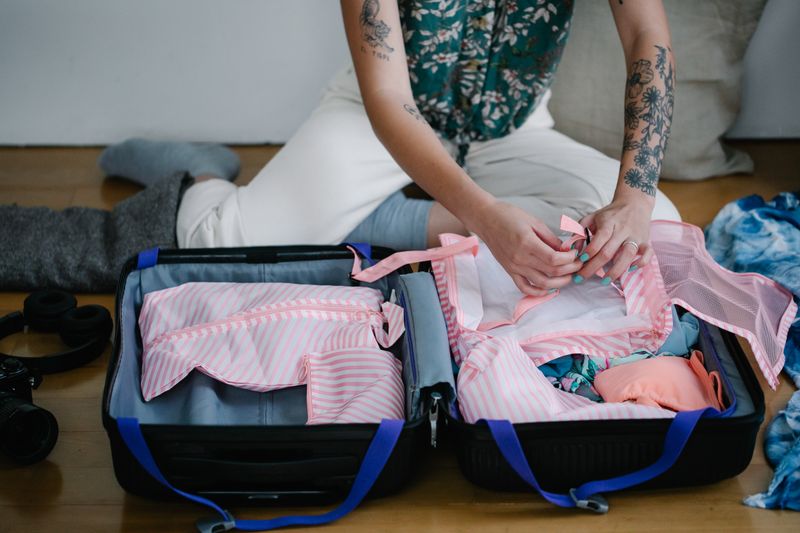
Clothing adapts to whatever space is left. Everything else does not, so the packing sequence should begin with the objects that have a fixed shape.
Shoes, a toiletry pouch, a charger and any electronics take their space regardless. Once those are placed, the remaining volume is the real clothing allowance, and it is usually smaller than expected.
What two nights actually requires
Three days of wear, one spare set of the things worn against the skin, and a shell for rain. That is the whole list for most short city trips.
Everything beyond it is either a contingency or a preference, and both are worth naming as such rather than packing automatically.
The bag stays with you at the gate
The practical advantage of the smallest size is that it never gets taken away. Larger cabin bags are routinely put in the hold when lockers fill, which reintroduces the wait at the carousel.
On a two-night trip that wait is the difference between reaching the city in daylight and arriving after everything has closed, which is a real cost rather than a theoretical one.
Where the approach breaks down
It fails when the trip has two dress codes, when the weather spans a wide range, or when specialist equipment is genuinely required.
Those are legitimate reasons to buy the larger allowance rather than to pack badly into the small one. The mistake is paying for space by default when the trip does not need it, then filling it because it is there.
Questions readers ask
How far ahead is a forecast reliable?
The broad picture holds well over a couple of days and degrades noticeably beyond a week. A two-night trip fits inside the dependable range.
Should I rebook if the weather looks poor?
If the trip is outdoors and the outlook is genuinely bad, moving it usually beats enduring it, which is easier when accommodation terms are flexible.