Timing
The Friday Evening Bank Is The Fragile One
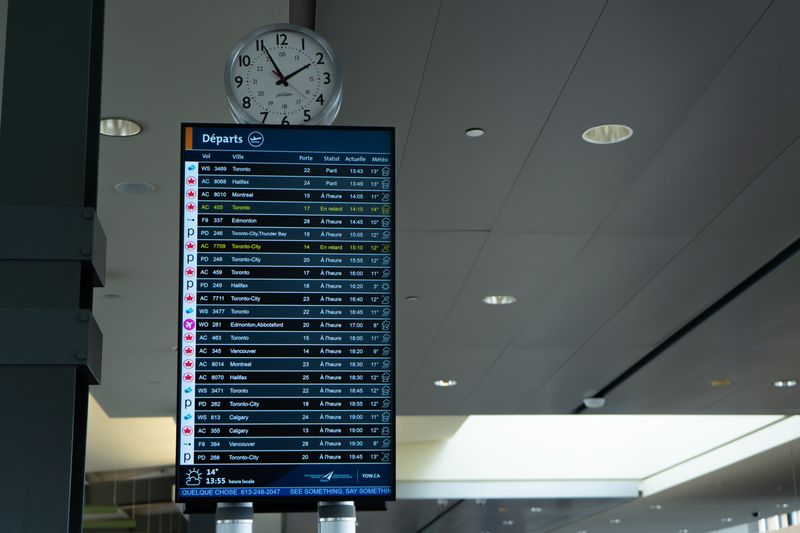
Late Friday departures carry the accumulated delay of an entire operating day, which is why the flight that starts a weekend is the one most likely to break it.

The evening departures that most short trips are built on are the last wave of a long operating day, and they inherit everything that went wrong earlier. That is a structural feature of the schedule rather than bad luck.
How delay accumulates through a day
An aircraft flies several segments in a day, and each one begins where the last ended. A delay in the morning is carried forward unless the schedule contains slack to absorb it.
Slack is expensive, because an aircraft sitting at a gate earns nothing, so schedules are built tight and recovery time is limited to what the operation genuinely needs.
By late afternoon the accumulated slippage across a network is at its maximum, which is why departure punctuality declines steadily as the day goes on.
Why crews are the second constraint
Flight crews work to legally limited duty periods, and those limits are measured from when the duty day began rather than from when a particular flight was supposed to leave.
A crew that has absorbed several hours of delay can reach its limit before the last flight of the day operates, and at that point the flight cannot go regardless of the aircraft being ready.
Replacement crews are easier to find at a hub than at an outstation, which is part of why late cancellations cluster at smaller airports.
The recovery problem after the last departure
A delay in the morning is inconvenient because you wait. A cancellation at nine in the evening is different, because there is nothing left to rebook onto that night.
On a two-night trip the next morning's flight does not solve the problem. It removes the first of your two days and often the reason you booked those particular dates.
Routes with several daily frequencies protect against this and thin routes do not, which is the single most useful thing to check before buying a Friday evening ticket.
What departing earlier actually buys
An afternoon departure sits earlier in the accumulation curve and leaves later flights available as a fallback on the same day.
The first departures of the morning are the most punctual of all, because the aircraft has usually been on the ground overnight and starts the day with no inherited delay.
Trading a half day of work for that reliability is the calculation many regular short-trip travellers eventually make in one direction or the other.
Planning around it rather than hoping
The practical response is to avoid making the Friday evening flight load-bearing, and to keep anything time-critical off the first evening.
Booking accommodation that permits a late arrival, and knowing what the airline's ground staff can offer if the flight does not operate, converts a ruined weekend into a shortened one.
Questions readers ask
Is it worth taking a day of leave?
Frequently. One day of leave attached to a weekend can nearly double the usable time, which is a better return than most fare savings.
How early should I arrive at the airport?
Follow the airline guidance, and remember that time spent waiting is time removed from a short trip. Hand luggage only is the main lever here.
Also by Priyanka Sethi
- Hand luggage only, for two nightsTravelling Light
- Cities that reward a weekend, and cities that punish oneShort-Break Cities
- Arriving late and leaving early without wasting the trip48 Hours
- The near-home break that beats flyingNear-Home Escapes