Timing
The first flight of the day and the last
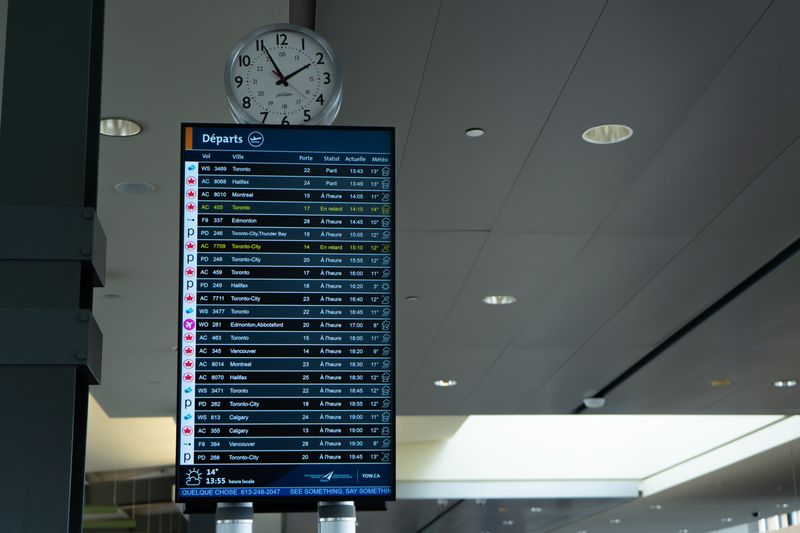
Delays accumulate as a day goes on, because aircraft are used repeatedly. Which departure you choose changes your odds before anything goes wrong.

This works through delay propagation in the order the parts actually depend on each other.
The short version
- An aircraft flies several rotations a day, and lateness carries forward through them.
- Early departures start with an aircraft that has usually been in position overnight.
- Later departures have more alternatives if cancelled, which cuts the other way.
How a delay gets inherited
Short-haul aircraft fly several rotations in a day, so the aircraft operating your evening flight has already flown three or four times. Any lateness earlier in that sequence is carried forward, because the turnaround time between rotations is deliberately short. That is why departure punctuality tends to deteriorate through the day and recovers overnight when the schedule resets.
The effect is structural rather than a sign of a poorly run airline, and it appears across the industry in similar shapes. It means the time of day you choose changes your probability of a delay before any specific problem has occurred.
Why early departures are more reliable
The first flight of the day usually operates an aircraft that has been parked overnight and is already at the gate. Crew are at the start of their duty period, which removes another category of delay that appears later in the day.
Airports are also at their quietest, so ground handling, taxi times and air traffic flow are all less constrained. The combination makes early departures noticeably more punctual on average, though it says nothing about any individual flight. The cost is an unpleasant start, and on a short trip that cost is real and has to be weighed rather than dismissed.
The argument for later flights
A later departure is easier to reach, requires no overnight adjustment and does not consume the evening before the trip. It also has more alternatives behind it, so a cancellation may be recoverable on a subsequent service that same day. The last flight of the day inverts that entirely, because a cancellation leaves nothing after it and costs a night.
So the reliability question is really two questions: how likely a delay is, and what happens if the flight does not operate. Early departures win the first and lose the second, and the last departure of the day loses both.
Where this matters most on a short trip
On the outbound, a delay costs hours from a trip that has few of them, and a cancellation can remove a large share of the weekend. On the return, a delay costs the evening at home and possibly the Monday, which for many people is the more serious outcome.
The last flight home on a Sunday is therefore the single riskiest booking in the whole short-break format. It is also the one that maximises time on the ground, which is precisely why so many people choose it.
Making that trade knowingly is reasonable; making it without noticing is how weekends turn into unplanned Monday absences.
Reading a schedule for resilience
Count how many services operate your route that day, because that number is what determines whether a cancellation is recoverable. A route with several daily frequencies is far more forgiving than one with a single departure, regardless of the aircraft or the airline. Weekend timetables are often thinner than weekday ones, which is exactly the wrong direction for a Friday to Sunday trip.
Where a route runs only a few times a week, treat every leg as unrecoverable and plan the rest of the trip accordingly. This is more informative than any punctuality statistic, because it describes what happens to you rather than to an average.
Adjust the size of it until it is something you would actually do tired.
Choosing deliberately
For the outbound, an early or mid-morning departure buys reliability and a full first day at a modest cost in sleep. For the return, the trade is between hours on the ground and the risk of arriving home very late or not at all. Anybody with an immovable Monday should treat the last Sunday service as a poor choice regardless of how much time it adds.
Where the route has frequent alternatives, the risk is smaller and the calculation shifts towards taking the later flight. The point is that these are different decisions on each leg, and treating them as one is how the wrong pair gets booked.
The takeaway
Count the remaining departures behind your flight; that number is your safety margin.
Small and repeatable beats ambitious and abandoned, almost every time.
Questions readers ask
Are early flights really more punctual?
On average yes, because the aircraft and crew start fresh and the airport is quiet. It is a tendency across the schedule, not a guarantee for your flight.
Is the last flight home a bad idea?
It maximises time on the ground and has nothing behind it if cancelled. Fine if Monday is flexible, risky if it is not.