Short-Break Cities
The place you have already seen in photographs
Famous views arrive pre-experienced. Knowing that in advance changes what you plan and what the weekend actually delivers.
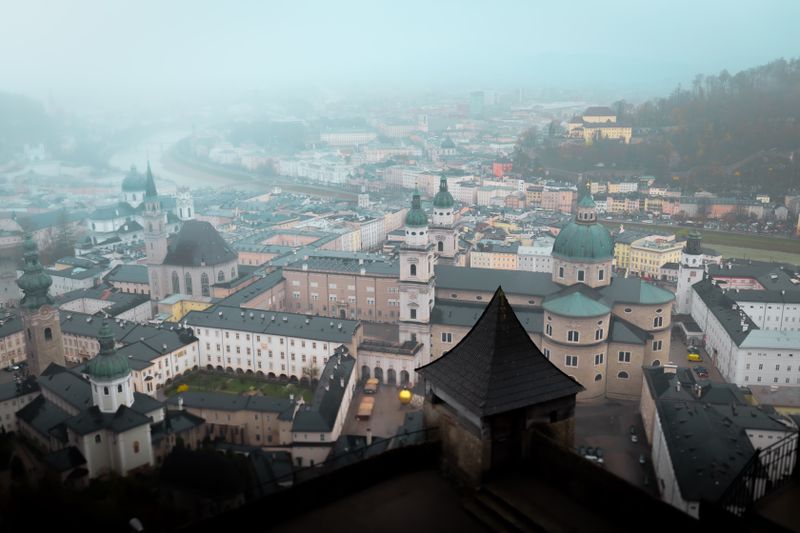
Comparisons of familiar destinations usually pick a winner. This one picks the circumstances, which is more useful.
The difference in one place
- Widely photographed places deliver recognition rather than discovery.
- The surrounding context is usually the part that images cannot convey.
- Plan the famous item briefly and spend the time on what is not photographed.
Recognition is not the same as discovery
A view you have seen hundreds of times arrives with its impact partly spent, because the visual surprise has already happened elsewhere. What remains is scale, sound, temperature and the experience of standing somewhere, and those are genuinely not available in an image. Travellers who expect the photograph to be surpassed are often disappointed, while those expecting a different kind of experience are not.
The failure is one of expectation rather than of the place, and it is entirely predictable before departure. Naming what you actually want from the visit, before going, is the simplest correction available.
What images leave out
Photographs are taken from a small number of positions, at flattering hours, and usually with everybody else cropped out of the frame. The real setting includes the traffic, the surrounding buildings and the several hundred people doing exactly what you are doing. That context is not a disappointment so much as information, since it explains what the place is rather than how it presents.
On an ordinary week, some famous sites are considerably more impressive in reality, particularly where scale is the point and images flatten it. Others are smaller than expected, and knowing which category a place falls into is worth a minute of reading beforehand.
The efficient way to visit one
A famous item on a two-night trip is usually best treated as a short visit rather than as an afternoon. Going early removes most of the crowd and gives the fifteen minutes that the visit actually requires without a queue.
Having somewhere to go immediately afterwards prevents the aimlessness that follows a visit which delivered less than expected. Combining it with a district nearby that you had no image of at all produces a much better-shaped morning. This is not cynicism about famous places; it is an allocation of hours that reflects what each part actually returns.
Where the unphotographed parts are
Ordinary streets, markets, working districts and residential neighbourhoods are almost never photographed and are where a city is legible. These are also the parts that differ most between cities, since famous monuments increasingly resemble each other in their handling of visitors.
Spending the bulk of a weekend on them produces the sense of having been somewhere rather than having verified something. They require no booking, no queue and no timing, which suits the unstructured block that a short trip should contain.
They are also where the trip becomes personal, because nobody else photographed the particular corner you happened to like.
Photographing it yourself
The urge to take the same image is strong and mostly unsatisfying, since a better version already exists and is freely available. Photographs of people, of detail and of the ordinary tend to be the ones still worth looking at years afterwards.
The useful part is this: time spent arranging a familiar composition is time not spent looking, which on a weekend is a poor exchange. A few minutes of deliberate attention without a camera is a reliable way to remember a place more clearly. Local rules about photography vary, particularly in religious buildings and around people, so follow the guidance given on site.
None of this is a substitute for talking to a clinician if something feels wrong.
Choosing a destination on this basis
Somewhere you have seen extensively in images offers less discovery per hour than somewhere you have not. For a short trip, where hours are the constraint, that argues for the less documented option when both otherwise appeal equally.
It also argues for going to famous places for reasons other than the famous item, such as the food or the setting. This is a large part of why second cities so often produce better weekends than the ones everybody photographs. The point is not to avoid famous places but to know what they will and will not supply before spending two nights on them.
Side by side
| Consideration | What it means in practice |
|---|---|
| Recognition is not the same as discovery | Widely photographed places deliver recognition rather than discovery. |
| What images leave out | The surrounding context is usually the part that images cannot convey. |
| The efficient way to visit one | Plan the famous item briefly and spend the time on what is not photographed. |
The takeaway
Give the famous view twenty minutes and the ordinary streets the rest of the day.
Small and repeatable beats ambitious and abandoned, almost every time.
Questions readers ask
Are famous sights worth visiting at all?
Often, briefly and early. Scale and setting are real and unphotographable; the visual surprise is not, because you have already had it.
Why do famous places sometimes disappoint?
Because the image arrived first and was taken in ideal conditions with the crowd cropped out. The place is fine; the expectation was formed by an edit.