Short-Break Cities
Rivers, harbours and the time they add to a crossing
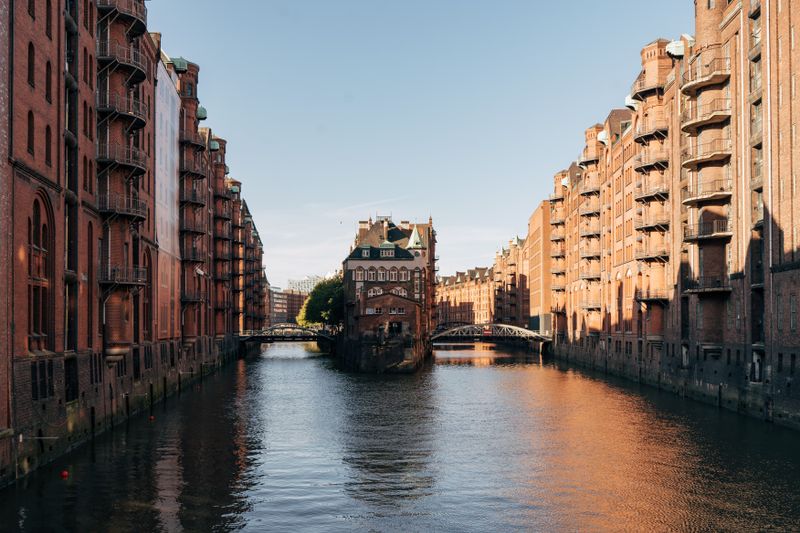
Water looks like scenery on a map. On the ground it is a wall with a small number of doors, and those doors decide your day.
Everything below about water in a city plan comes from what actually happens rather than from what is supposed to.
What holds up in practice
- Water restricts movement to a few crossings, which lengthens journeys unpredictably.
- Two banks often behave as two separate cities for a short visit.
- Staying on the side with most of your plans avoids repeated crossings.
Why water changes the arithmetic
A straight line on a map means nothing when the ground between two points is water and the crossings are half a mile apart. The detour to a bridge is paid twice, once out and once back, and on a short trip that repeats through the whole day. Crossings are also chokepoints, so they carry more traffic than the streets either side and move more slowly at busy hours.
The effect is largest where the water is wide, where the crossings are few, and where they are old enough to be narrow. None of this appears in a distance measurement, which is why an apparently compact city can feel unexpectedly slow.
Two banks, two cities
Where a river is wide, the two sides frequently developed differently and function as distinct places with their own character. That can be a genuine attraction, since seeing both gives a short visit contrast that a single district cannot provide. It also means the useful question is not where the centre is but which bank holds the things you actually intend to do.
Visitors often discover on the second day that they have crossed four times for reasons that better planning would have removed. Grouping plans by bank, and crossing once each way, is the simplest itinerary improvement available in a city built on water.
Harbours, inlets and lagoons
A harbour city has the same problem in a more severe form, because the water intrudes rather than merely passing through. Journeys that look short can require going a long way inland to get around the head of an inlet.
For most people, where a ferry exists it is often the fastest link as well as the most enjoyable one, though frequencies vary and drop at weekends. Ferries are also weather-dependent in a way that buses are not, which introduces a risk that a short trip has no room for. Checking the frequency and the last service is essential, because a missed crossing can mean a very long journey by land.
Where to stay when water divides a city
The instinct is to stay somewhere with a view of the water, which frequently means staying on the wrong side of it. A short break benefits far more from being near what you plan to do than from a window that faces the river. Where the two banks differ in atmosphere, choosing the quieter one to sleep on and the busier one to visit often works well.
Where it helps most, being within walking distance of at least one crossing is worth more than being close to the water itself.
The test is whether your first morning starts with a journey, because on two nights that journey repeats four or six times.
Water as the orientation landmark
The advantage of a divided city is that the water itself is the easiest possible landmark for building a mental map. Knowing which way the river runs and which bank you are on answers most navigation questions without any device at all. Bridges become the fixed points of that map, and remembering two of them is usually enough to move confidently.
This makes water cities easier to learn quickly than sprawling ones, which partly compensates for the detours they impose. For a two-night visit, that speed of orientation is a real benefit rather than a consolation.
If that does not fit your week, it is not a failure of willpower.
Judging a city from the map before booking
Before choosing a destination, look at how many crossings exist within the area you would actually be moving around in. A city with crossings every few hundred metres behaves as one place; a city with three crossings behaves as two. Check where the station and the airport link arrive, since arriving on the far bank from your accommodation costs a crossing immediately.
This takes a couple of minutes and removes a category of frustration that people usually only discover on the ground. It is the same exercise as checking for hills, and for a short trip it is worth doing before the fare comparison.
The takeaway
Count the crossings before you book the bed.
The version you keep doing is the version that works.
Questions readers ask
Does a river really matter over two nights?
It can. Each crossing costs a detour and a chokepoint, and a badly placed base can mean crossing six times in a weekend.
Are ferries a good idea on a short trip?
Often the fastest and most enjoyable link, but check frequency and the last service. Weather can suspend them, and a short trip has no spare day.