Short-Break Cities
Capitals Of Small Countries Suit This Length
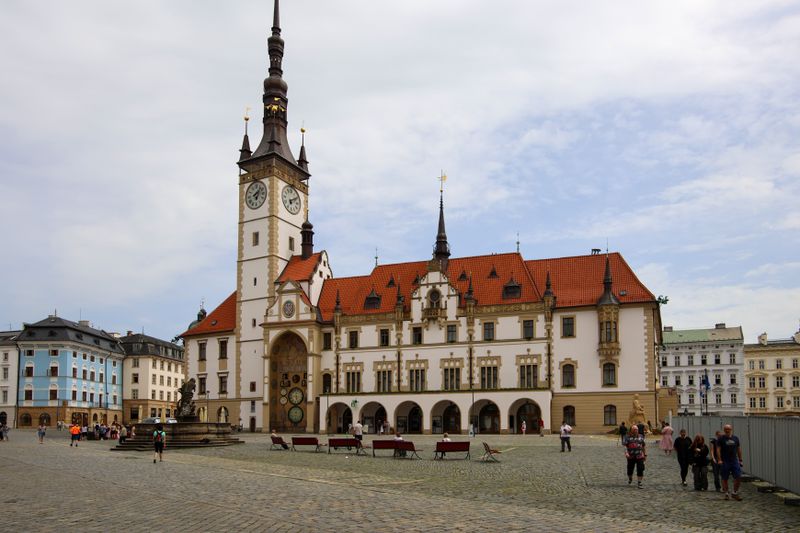
A small country's capital concentrates national institutions into a walkable centre, which gives a two-night visitor unusual range without any internal travel.

Capital cities are usually the wrong size for two nights. The exception is the capital of a small country, where the same institutions exist at a scale that can be walked.
Concentration without extent
Every country needs the same set of things: a parliament, a national museum, a principal gallery, a cathedral, a central square. Where the population is small, all of them fit into a few hundred metres.
The visitor therefore gets the variety of a capital with the geography of a market town. Moving between two major sights costs minutes rather than a transport decision.
That is the specific quality a short break needs, because the losses on a two-night trip come mostly from movement rather than from a shortage of things to see.
The collections are national rather than local
A national museum in a small country still holds the national collection, which means the whole story of a place is told in one building rather than dispersed.
The scale suits a short visit too. A collection sized for a small country can be seen properly in two hours, where a large national museum cannot be seen properly at all.
Institutions bring an evening with them
Capitals house government, universities and broadcasting, and the people employed by those things live nearby. That sustains restaurants, theatres and bars through the week rather than only at weekends.
Smaller cities without that institutional base often lack a weekday evening entirely, which is what makes a midweek short break there disappointing.
Getting there is often the constraint
Small capitals may have a single airport with a limited route network, and the connections that exist tend to be timed for the local market rather than for visitors.
Where the flight is inconvenient, the surface alternative is frequently good, since small countries have short internal distances and rail links to their neighbours.
Checking both before fixing the dates is worthwhile, because the difference between a workable departure time and a poor one is a large share of a two-night trip.
The limit is depth rather than breadth
What these cities do not offer is a second layer. Once the central institutions and the old core are covered, the remaining ground is ordinary residential city.
That makes them close to ideal at two nights and thin at four. The trip should be sized to the place rather than the place stretched to fill a longer trip.
Questions readers ask
Which day is usually the closed one?
It varies by country and institution, and there is no safe assumption. Check the specific places you care about for your specific dates.
Are weekends better or worse for a short break?
It depends on the destination. Some places are livelier and some largely shut down. The rhythm of the place decides, not the calendar you are used to.