Fares & Booking
Fewer long trips or more short ones
The same annual budget of money and leave can be spent as one big trip or six small ones. They produce genuinely different things.
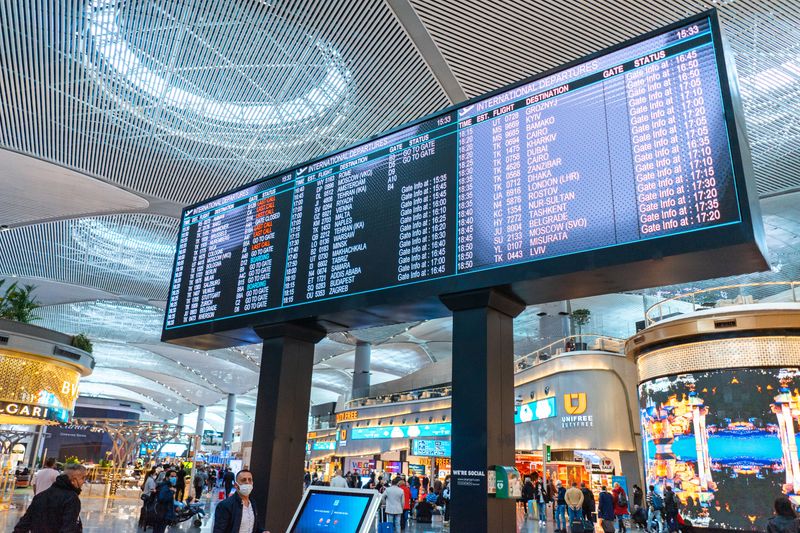
Both approaches to trip frequency work. What differs is what they cost you, and the cost is what this sets out.
The difference in one place
- Fixed journey costs are spread thinner on longer trips.
- Short trips deliver anticipation and variety more often.
- Deep rest generally needs more consecutive days than a weekend provides.
The arithmetic favours length
Every trip carries fixed costs that do not scale with duration: the journey there and back, and the effort of arranging it. Spread over ten days those costs are small per day; spread over two they dominate.
On pure cost efficiency, one long trip beats several short ones almost every time. Cost efficiency is not the only thing people are buying, which is why the argument does not end there.
Frequency buys anticipation
The pleasure of a trip includes the weeks of looking forward to it, and that period repeats with each trip. Six short breaks produce six of those periods; one long holiday produces one. Research on wellbeing has generally found anticipation to be a substantial part of the benefit of travel, though the size of the effect is debated.
That is a real return, and it is invisible in the cost-per-day calculation.
Depth of rest favours length
Genuine decompression tends to take several days, because the first days are usually spent unwinding rather than resting. A two-night break rarely reaches that point, which is why people return from them stimulated rather than restored. If the goal is recovery from a sustained heavy period, length is doing the work.
For most people, if the goal is a change of scene, length is not necessary.
Leave entitlement changes the answer
Where paid leave is generous, splitting it into several short breaks is a genuine choice. Where it is scarce or unpredictable, short trips built around non-working days may be the only workable shape. Entitlements vary enormously between countries and contracts, and no single recommendation fits.
Work out what your own arrangement allows before importing advice written for somewhere else.
The mixed year
Most people who think about this end up with one longer trip and several near-home short ones. That shape gets the deep rest from the long trip and the frequency from the short ones without repeating the long journey six times.
It also keeps emissions concentrated in one journey rather than six. It is a compromise, and it is a well-reasoned one.
Match the shape to the purpose
Ask what a particular trip is for before deciding how long it should be. Curiosity, a specific event or a change of scene are well served by two nights.
In practice, exhaustion, an unfamiliar culture or a long journey are not. Most disappointing trips are the right length for the wrong purpose.
If that does not fit your week, it is not a failure of willpower.
The emissions arithmetic is not linear
A disproportionate share of a flight's fuel is burned on take-off and the climb, which is why a short flight carries a heavier cost for each hour in the air than a long one does. That makes six short flights a year a worse choice than one long one on emissions grounds, which cuts directly against the case for frequency and is worth saying rather than stepping around. The version of the argument that survives is short breaks taken by rail or road close to home alongside a single longer flight, rather than more flying spread more thinly across the year.
Estimates of how large that difference is vary with aircraft, load factor and the method of calculation, so the direction of the effect is far more dependable than any particular figure attached to it.
Side by side
| Consideration | What it means in practice |
|---|---|
| The arithmetic favours length | Fixed journey costs are spread thinner on longer trips. |
| Frequency buys anticipation | Short trips deliver anticipation and variety more often. |
| Depth of rest favours length | Deep rest generally needs more consecutive days than a weekend provides. |
The takeaway
Length buys rest and efficiency. Frequency buys anticipation and variety. Decide which you are short of.
Small and repeatable beats ambitious and abandoned, almost every time.
Questions readers ask
Is one long holiday a year enough?
For rest it often is. For variety and anticipation, people who add short breaks generally report a better year, though this is personal rather than settled.
Do short breaks use less leave overall?
Not necessarily, but they use it in smaller units, which is easier where leave must be taken around fixed commitments.
Also by Lukas Vogel
- The near escape: two nights without a planeNear-Home Escapes
- The cost per usable hour on the groundFares & Booking
- When a short trip is not worth takingFares & Booking
- What two nights away costs beyond the ticketFares & Booking